
Treatment By Age
Early Treatment
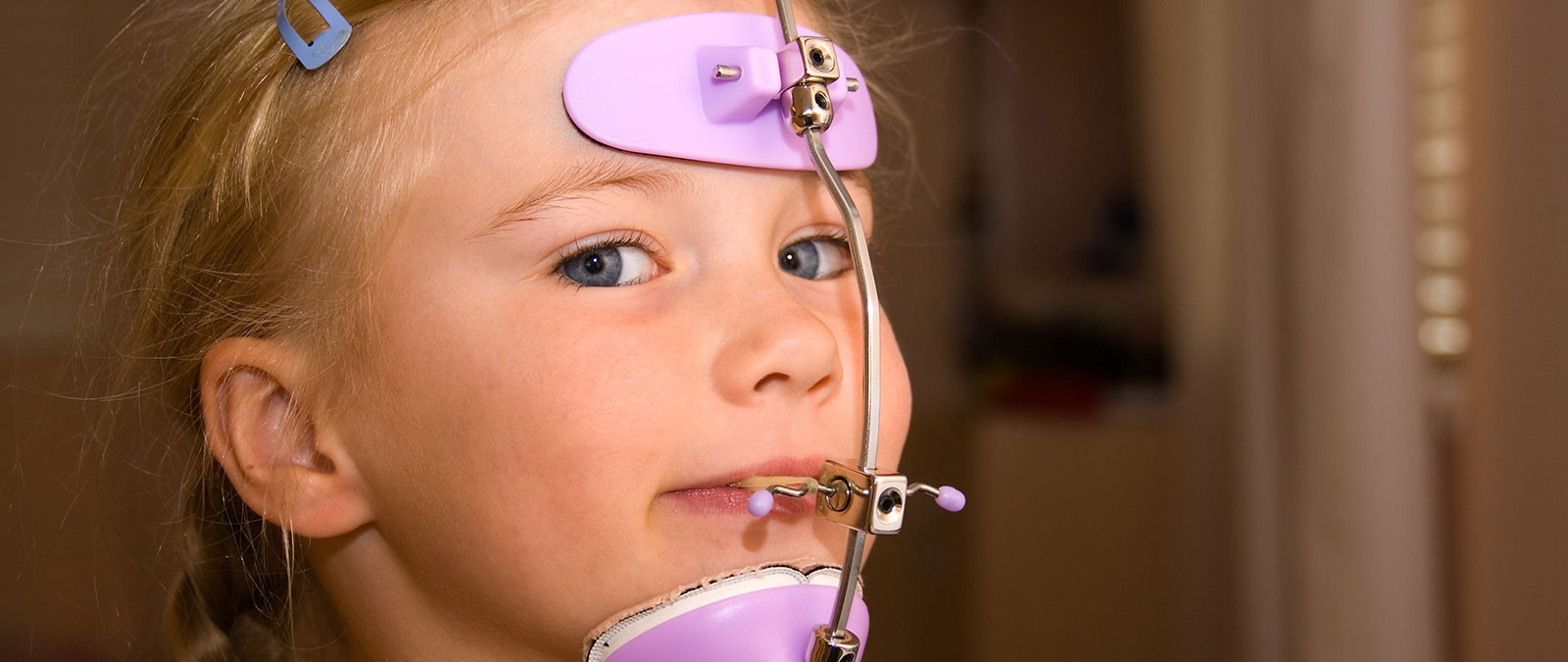
Though an orthodontist can enhance a smile at any age, the American Association of Orthodontists recommends that every child by the age of 7 have an initial orthodontic evaluation. Early evaluation provides both timely detection of problems and greater opportunity for more effective treatment. At this age, the first permanent molars and incisors have usually erupted. Crossbites, crowding, and other problems can be evaluated. When treatment is begun early (Phase I), the orthodontist can guide the growth of the jaw and guide incoming permanent teeth. Early treatment can also regulate the width of the upper and lower dental arches, gain space for permanent teeth, avoid the need for permanent tooth extractions, reduce likelihood of impacted permanent teeth, correct thumb-sucking, and eliminate abnormal swallowing or speech problems. In other words, early treatment can simplify later treatment. Because all of the permanent teeth have not yet erupted when early treatment is performed, their final alignment may not have been corrected. Typically, a shortened comprehensive phase of treatment (Phase II – full braces) in the teen years, after all the permanent teeth have erupted, completes the correction. However, in some circumstances, further orthodontic treatment may not be indicated.
When orthodontic intervention is not necessary, an orthodontist can carefully monitor growth and development and begin treatment when it is ideal.
Adolescent Treatment
Between the ages of 11 and 15 is the most common time for orthodontic treatment. At this time, most if not all of the permanent teeth have erupted and are in place, and crooked teeth, gaps and bad bites can easily be detected. These problems will rarely ever correct themselves, so this is when most parents decide to seek orthodontic treatment.
During this age, children are growing rapidly, and orthodontists can usually take advantage of these growth spurts to help shape the bite and teeth correctly. And children at this age have high metabolisms, which can help shorten overall treatment time and reduce the discomfort of orthodontic treatment.
This is also a good time for orthodontic treatment because many negative opinions about braces are not present. Many children in this age range undergo orthodontic treatment, and children are very often able to be convinced to wear braces because they see their friends wearing them, too, and want to fit in.
Adult Treatment
Orthodontics is not just for children and teens. In fact, 1 in every 5 patients in orthodontic treatment is an adult. No one is too old for orthodontic treatment.
Adults seek orthodontic treatment for many of the same reasons as children. Some adults had orthodontic problems as children but were unable to correct them until now. Others, who had orthodontic treatment as children, may need further treatment as adults due to relapse or limitations in initial treatment. Orthodontic treatment at later stages in life can dramatically improve your personal appearance and self-esteem. Improving the health of your teeth and gums is equally important. Crooked teeth and a bad bite can contribute to gum and bone loss, tooth decay, abnormal wear of the tooth enamel and surfaces, headaches and jaw joint (TMJ/TMD) pain.
Good news! The new techniques and appliances we use greatly reduce discomfort levels, decrease the frequency of visits, shorten treatment time and may allow you to choose from several options. Your options may include metal braces, translucent braces, lingual braces or transparent aligners.
Surgical Orthodontics
Jaw surgery is sometimes required for adults due to the lack of jaw growth as an aid in orthodontic treatment. Some adults may have experienced bone loss or gum tissue loss over the years; this may limit the amount and direction of tooth movement possible in adult cases. Just as orthodontics repositions teeth, surgical orthodontics (also known as orthognathic surgery) corrects jaw irregularities to improve the patient's ability to chew, speak, and breathe and for improved facial appearances. In other words, surgical orthodontics straightens your jaw. Moving the jaws also moves the teeth, so braces are always performed in conjunction with jaw correction. This helps make sure teeth are in their proper positions after surgery.
Your orthodontist will consider surgical orthodontic treatment for non-growing adult patients with improper bites and those with facial aesthetic concerns. Jaw growth is usually completed by age 16 for girls and 18 for boys. All growth must be completed before jaw surgery can be performed. However, the pre-surgical tooth movements can begin one to two years prior to these ages.
Types of Braces
Metal Braces
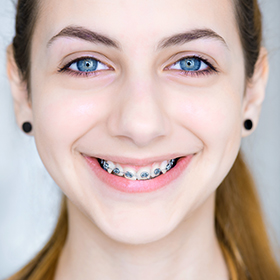
Traditional metal braces are the most common type of braces and are smaller and more comfortable today than ever before. Made of high-grade stainless steel, metal braces straighten your teeth using metal brackets and archwires. With metal braces, you have the option of adding colored elastics (rubber bands) for a more unique and colorful smile.
Ceramic Self-Ligating Braces
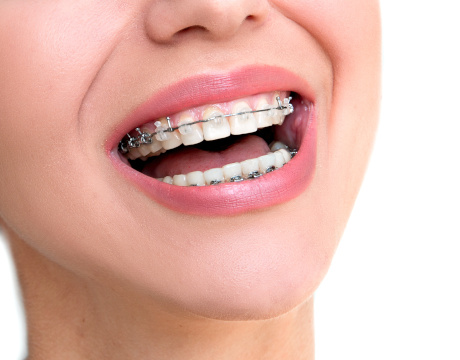
No elastic or steel ties are used with ceramic self-ligating brackets. This technology creates less friction and may result in greater comfort for the patient. They are made of clear materials and are therefore less visible on your teeth than metal braces. For this reason, ceramic self-ligating braces are used mainly on older teenagers and adult patients who have aesthetic concerns. While they are visually less prominent, they do require more attention to oral hygiene as ceramic braces are larger than metal braces. The only drawback to ceramic brackets is that they are more fragile, and the elastic ties can discolor between orthodontic visits with certain foods and smoking.
Lingual Braces
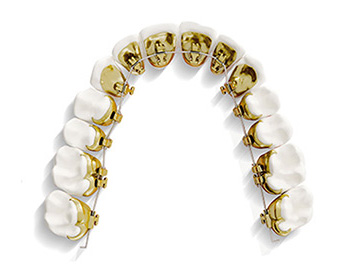
Incognito™ Orthodontic Braces are as unique as the people who wear them. Incognito™ Orthodontic Braces are 100% Customized. They are placed behind your teeth so no one will know that you are wearing braces unless you tell them. Incognito™ orthodontic braces have the unique prescription that your orthodontist creates for you built-in to ensure you get the results that you want. With Incognito orthodontic braces you get efficient, effective tooth movement and great aesthetics. Most people who can be treated with regular braces can be treated with Incognito™ orthodontic braces, but only your orthodontist can tell you if they are the right treatment option for you.
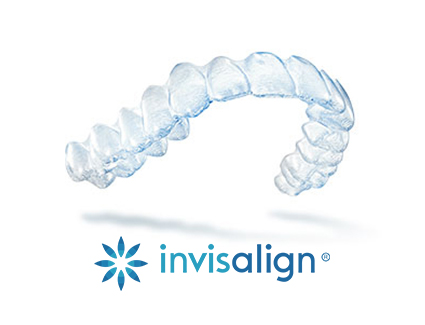
Clear Aligners
Clear appliances (such as clear aligners) use a series of invisible, removable, and comfortable aligners to straighten your teeth. And, no one can tell you are wearing those aligners because they are invisible! Not only are the aligners invisible, they are removable, so you can eat and drink what you want while in treatment, plus brushing and flossing are less of a hassle. The aligners are comfortable and have no metal to cause mouth abrasions during treatment.